Câu 1
Đáp án do AI giảiB: READING
Time permitted: 60 minutes
Number of questions: 40
Directions: In this section you will read FOUR different passages. Each one is followed by 10 questions about it. For questions 1-40, you are to choose the best answer A, B, C or, to each question. Then, on your answer sheet, find the number of the question and fill in the space that corresponds to the letter of the answer you have chosen. Answer all questions following a passage on the basis of what is stated or implied in that passage. You have 60 minutes to answer all the questions, including the time to transfer your answers to the answer sheet.
Questions 1-10
In the last third of the nineteenth century a new housing form was quietly being developed. In 1869 the Stuyvesant, considered New York's first apartment house was built on East Eighteenth Street. The building was financed by the developer Rutherfurd Stuyvesant and designed by Richard Morris Hunt, the first American architect to graduate from the Ecole des Beaux Arts in Paris. Each man had lived in Paris, and each understood the economics and social potential of this Parisian housing form. But the Stuyvesant was at best a limited success. In spite of Hunt's inviting fagade, the living space was awkwardly arranged. Those who could afford them were quite content to remain in the more sumptuous, single-family homes, leaving the Stuyvesant to young married couples and bachelors.
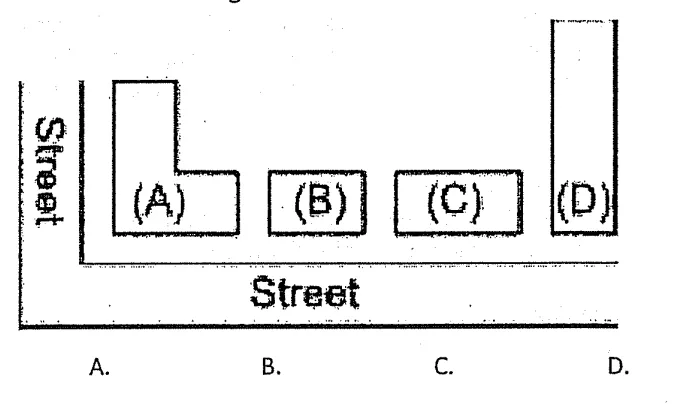
The fundamental problem with the Stuyvesant and the other early apartment buildings that quickly followed, in the 1870's and early 1880's was that they were confined to the typical New York building lot. That lot was a rectangular area 25 feet wide by 100 feet deep - a shape perfectly suited for a row house. The lot could also accommodate a rectangular tenement, though it could not yield the square, well-lighted, and logically arranged rooms that great apartment buildings require. But even with the awkward interior configurations of the early apartment buildings, the idea caught on. It met the needs of a large and growing population that wanted something better than tenements but could not afford or did not want row houses.
So while the city's newly emerging social leadership commissioned their mansions, apartment houses and hotels began to sprout in multiple lots, thus breaking the initial space constraints. In the closing decades of the nineteenth century, large apartment houses began dotting the developed portions of New York City, and by the opening decades of the twentieth century, spacious buildings, such as the Dakota and the Ansonia finally transcended the tight confinement of row house building lots. From there it was only a small step to building luxury apartment houses on the newly created Park Avenue, right next to the fashionable Fifth Avenue shopping area.
The new housing form discussed in the passage refers to
Đáp án và lời giải
Đáp án: B