Câu 165
Đáp án và lời giải
Đáp án: A
1/235 câu đang cập nhật đáp án (ghi rõ ở từng câu), chưa tính điểm; điểm tính trên 234 câu còn lại.
Đáp án: A
Đọc tư liệu dưới đây và trả lời các câu hỏi từ 415 đến 417.
“Sau khi thực dân Pháp và Chính phủ Trung Hoa Dân quốc kí Hiệp ước Hoa-Pháp (28-2-1946), Chủ tịch Hồ Chí Minh thay mặt Chính phủ Việt Nam Dân chủ Cộng hoà kí với Pháp Hiệp định Sơ bộ (6-3-1946) và Tạm ước (14-9-1946). Mặc dù Chính phủ Việt Nam luôn tỏ rõ thiện chí hoà bình nhưng thực dân Pháp luôn tìm cách phá hoại những điều đã kí kết, đẩy mạnh xâm lược cả nước ta. Ngày 18-12-1946, thực dân Pháp gửi tối hậu thư cho Chính phủ Việt Nam Dân chủ Cộng hoà đòi giải tán lực lượng chiến đấu và để quân Pháp làm nhiệm vụ giữ gìn trật tự ở Hà Nội. Trước tình hình đó, ngày 19-12-1946, Chủ tịch Hồ Chí Minh ra Lời kêu gọi toàn quốc kháng chiến.
Với đường lối kháng chiến toàn dân, toàn diện, trường kì, tự lực cánh sinh và tranh thủ sự ủng hộ của quốc tế, quân dân Việt Nam đã từng bước giành được những thắng lợi quân sự tiêu biểu.”
(Nguồn: SGK Lịch sử 12-bộ sách Kết nối tri thức với cuộc sống, trang 39)
Đảng và Chính phủ Việt Nam Dân chủ Cộng hòa quyết định phát động toàn quốc kháng chiến chống thực dân Pháp (19/12/1926) là do
Đáp án: B
Nội dung nào sau đây không phản ánh đúng nguyên nhân Đảng và chính phủ Việt Nam chủ trương phát động một cuộc kháng chiến toàn dân?
Đáp án: A
Đảng và chính phủ Việt Nam Dân chủ Cộng hòa chủ trương thực hiện đường lối đánh lâu dài trong cuộc kháng chiến toàn quốc chống thực dân Pháp (1946-1954) chủ yếu là do
Đáp án: A
Thời kì chuyển động biểu kiến Mặt Trời tại Bắc bán cầu, các nước theo dương lịch ở bán cầu Bắc là mùa
Đáp án: C
Đáp án: A
Hệ quả nào sau đây không phải là của khu vực hóa kinh tế?
Đáp án: B
Ở khu vực Mỹ Latinh có thuận lợi nào sau đây để phát triển cây lương thực và thực phẩm?
Đáp án: A
Đáp án: D
Đáp án: A
Cho bảng số liệu nhiệt độ trung bình tại Hà Nội và Thành phố Hồ Chí Minh:
(Đơn vị: 0C)
|
Tháng |
1 |
2 |
3 |
4 |
5 |
6 |
7 |
8 |
9 |
10 |
11 |
12 |
|
Hà Nội |
16,4 |
17 |
20,2 |
23,7 |
27,3 |
28,8 |
28,9 |
28,2 |
27,2 |
24,6 |
21,4 |
18,2 |
|
Tp. Hồ Chí Minh |
25,8 |
26,7 |
27,9 |
28,9 |
28,3 |
27,5 |
27,1 |
27,1 |
26,8 |
26,7 |
26,4 |
25,7 |
(Nguồn: Niên giám thống kê Việt Nam)
Theo bảng số liệu và dựa vào kiến thức đã học, phát biểu nào sau đây không đúng về khí hậu ở Hà Nội và Thành phố Hồ Chí Minh?
Đáp án: A
Cho bảng số liệu cơ cấu dân số theo nhóm tuổi ở nước ta giai đoạn 1999 - 2021
(Đơn vị: %).
|
Năm Nhóm tuổi |
1999 |
2009 |
2019 |
2021 |
|
0 - 14 tuổi |
33,1 |
24,5 |
24,3 |
24,1 |
|
15 - 64 tuổi |
61,1 |
69,1 |
68,0 |
67,6 |
|
Từ 65 tuổi trở lên |
5,8 |
6,4 |
7,7 |
8,3 |
(Nguồn: Kết quả toàn bộ Tổng điều tra dân số và nhà ở năm 1999, 2009, 2019;
Kết quả chủ yếu Điều tra biến động dân số và kế hoạch hóa gia đình năm 2021)
Nhận xét nào sau đây đúng với bảng số liệu trên?
Đáp án: C
Đáp án: A
Biểu đồ dưới đây thể hiện nội dung nào về mức bán lẻ hàng hóa và doanh thu dịch vụ của các thành phần kinh tế ở nước ta năm 2013 so với năm 2005?
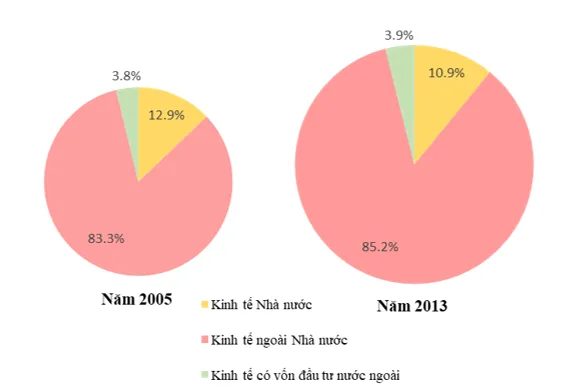
(Nguồn: Niên giám thống kê Việt Nam 2014, NXB Thống kê, 2015)
Đáp án: C
Đáp án: C
Đáp án: B
Đáp án: D
Vấn đề cần giải quyết liên quan đến nông nghiệp của vùng kinh tế trọng điểm Bắc Bộ là
Đáp án: A
Dựa vào bản đồ dưới đây và kiến thức đã học, trả lời các câu hỏi từ 515 đến 517.
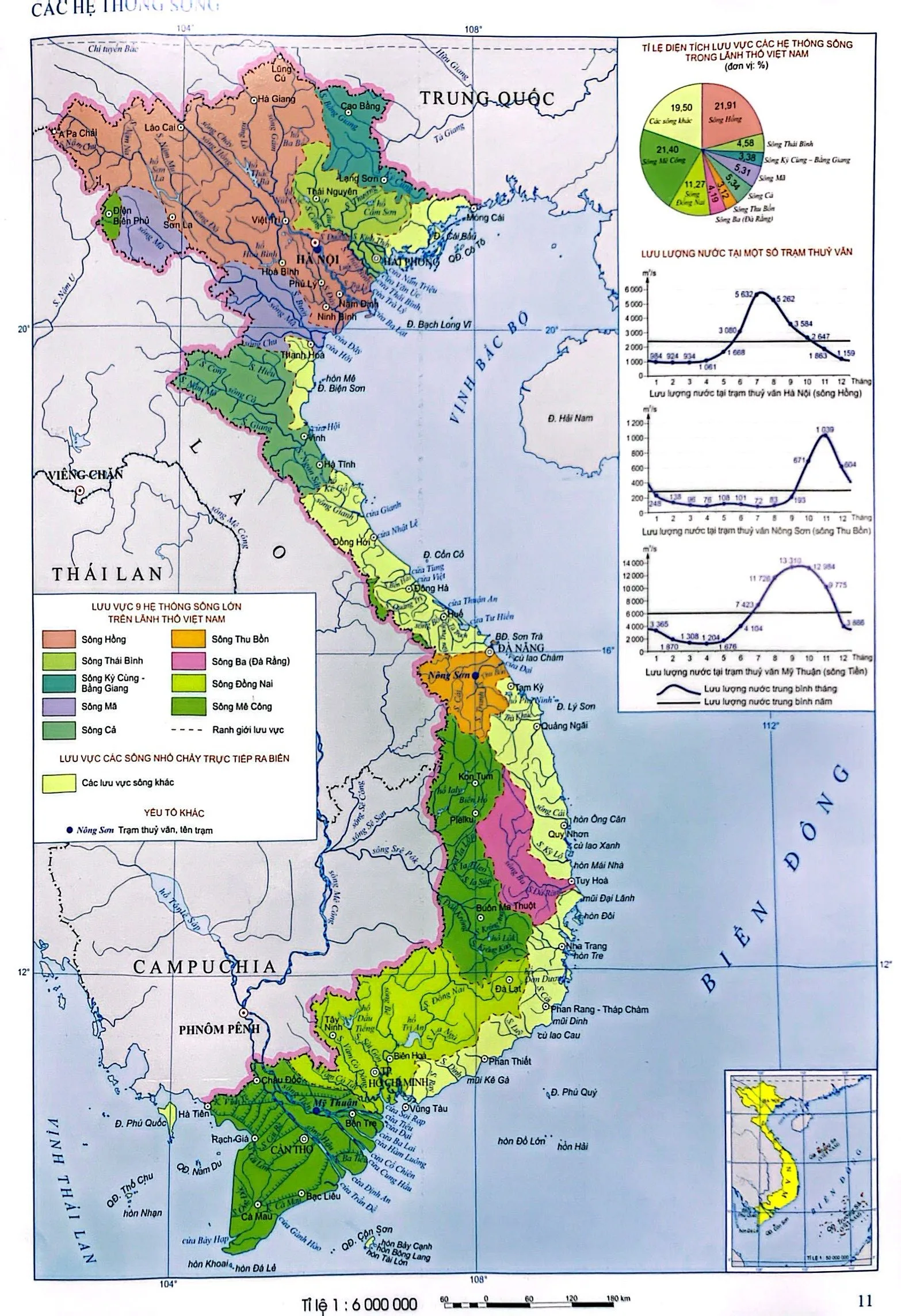
(Nguồn: Atlat Địa lí Việt Nam, Nxb Giáo dục Việt Nam, 2024)
Đáp án: C
Những đặc điểm nào sau đây của sông ngòi ở Đồng bằng sông Cửu Long thuận lợi nhất để nuôi trồng thủy sản?
Đáp án: D
Nước ta có mạng lưới sông ngòi dày đặc là do:
Đáp án: A
Sentence completion: Choose A, B, C, or D to complete each sentence.
We admire Mr. Lam _______ is a great firefighter.
Đáp án: A
The boy delayed _______ the classroom despite being late.
Đáp án: B
People _______ eat a balanced diet to stay healthy.
Đáp án: D
What is the most _______ city in the world?
Đáp án: B
Mai _______ taking vocational training after finishing high school next month.
Đáp án: A
Her speech was _______ to all students in the hall yesterday.
Đáp án: C
If Mike _______ taller, he would be admitted to the basketball team.
Đáp án: C
Households are advised to replace current lightbulbs with more _______ ones.
Đáp án: D
The government will get city dwellers _______ 20% of their carbon footprint.
Đáp án: D
Students had better _______ future employment opportunities when choosing their major in college.
Đáp án: B
Đáp án: A
To save money, he decided to cut down on dining at restaurants.
Đáp án: C
Đáp án: D
Choose A, B, C, or D that has the OPPOSITE meaning to the underlined word/phrase in each question.
This project brings together researchers to study how confusion can assist digital learning.
Đáp án: A
Lan: How was your weekend?
John: _____________
Đáp án: C
James: Thank you for driving me home.
Minh: _____________
Đáp án: B
Tracy: Do you want to try driving my car, to see how you like it?
Carly: Yeah, sure, _____________
Đáp án: D
Ann: Would you like to talk about it, or would you rather I gave you space?
Thuy: _____________
Đáp án: B
Dialogue arrangement: Choose A, B, C, or D to make a complete dialogue for each question.
a. In that case, I’ll draw you a map.
b. If you can wait five minutes, I’ll walk you there.
c. Where can I get good pho around here?
d. I’m in a hurry and need to leave now.
Đáp án: A
a. Right, people on floating markets advertise in this special way.
b. Why do people hang fruits in front of their boats?
c. Oh, fruits are sold on these boats, aren’t they?
d. By doing so, sellers don’t have to shout aloud.
Đáp án: D
a. I suppose you could always tell the truth.
b. What excuse will you give for not finishing your report?
c. Oh, yeah, you’re right.
d. I think I’ll say I got sick last night from bad seafood.
e. Didn’t that happen to you last month?
f. I can’t do that. I’ll fail for sure.
Đáp án: C
a. Well, as someone who drives a car, I’m acutely aware of it.
b. Then I propose joining me in using public transportation. Cars only contribute to the problem.
c. No. I redeem my commute time by reading a book, so I’m not paying attention to traffic.
d. Does the congestion seem worse to you today?
e. Surely you noticed that traffic was bumper to bumper.
f. I’m not the right person to ask, as I take the bus.
Đáp án: D
Sentence rewriting: Choose A, B, C, or D that has the CLOSEST meaning to the given sentence in each question.
Digital reading may be better for students than print reading.
Đáp án: B
Đáp án: A
Đáp án: C
Đáp án: D
Sentence combination: Choose A, B, C, or D that has the CLOSEST meaning to the given pair of sentences in each question.
The clouds are gathering. It’s going to rain.
Đáp án: A
I can ask someone to take me there or use public transport. I prefer the latter choice.
Đáp án: B
Đáp án: D
Đáp án: C
Cloze text: Read the passage below and choose A, B, C, or D to fill in each blank from 631 to 635.
AYVP, or “ASEAN Youth Volunteer Program,” is a special program for young people in the ASEAN region (a group of Southeast Asian countries). It helps them get (631) _______ and make a difference. This program (632) _______ together young people from different ASEAN countries to work together, promote cross-cultural understanding, and develop leadership skills. AYVP is also designed to address social issues of concern in ASEAN.
AYVP’s main goal is to help young people feel connected to the ASEAN community and encourage them to work together to solve problems. (633) _______ helps them not only gain valuable hands-on experience in volunteer work but also build lasting friendships and networks with their (634) _______ from neighboring countries. This helps them feel responsible for improving the region.
Overall, the ASEAN Youth Volunteer Program shows (635) _______ for young people to solve big problems. By giving young people the chance to make positive changes, AYVP helps the ASEAN community grow stronger and creates a better future for everyone.
Đáp án: B
Đáp án: C
Đáp án: A
Đáp án: D
Đáp án: A
Reading comprehension 1: Read the passage below and choose A, B, C, or D to answer each question from 636 to 640.
A human-like robot that can drive a car could one day be used as a chauffeur, though its creator admits that this may take at least 50 years.
Most driverless cars work very differently to a human driver, using artificial intelligence and custom mechanical systems to directly move the steering wheel and pedals. This approach is much more efficient and simpler than using a robot to drive, but it is also specially made for each particular car.
Kento Kawaharazuka at the University of Tokyo and his colleagues have developed a human-like robot, called Musashi, that can drive a car in the same way as a human. It has a human-like “skeleton” and “musculature”, as well as cameras in each of its eyes and force sensors in its hands and feet. Artificial intelligence systems work out what actions are needed to drive the car and react to events that often happen on roads such as traffic lights changing colour or a person stepping in front of the car. The robot can only perform a limited range of driving tasks at present, such as going forward in a straight line, taking a righthand turn, and moving at speeds of around five kilometres per hour on non-public roads. “The speed of the pedal or the velocity of the car is not high. Also, the handling of the car is not fast compared to human beings,” says Kawaharazuka.
It seems that a robot at the controls of a car, operating in real traffic conditions and in total safety, is not something we are likely to see soon. As mentioned earlier, it could be decades before a robot could really step into the driver’s seat.
What does “it” in paragraph 2 refer to?
Đáp án: B
Đáp án: D
Đáp án: A
What can Musashi NOT do?
Đáp án: C
Which of the following would the author most likely support?
Đáp án: D
Reading comprehension 2: Read the passage below and choose A, B, C, or D to answer each question from 641 to 645.
Data privacy means ensuring that our personal information is kept safe and used responsibly by others. In today’s digital world, where information spreads easily, it’s more important than ever to protect our personal data. This highlights the importance of privacy laws.
Laws about data privacy vary globally. For example, in Europe, the General Data Protection Regulation (GDPR) grants individuals rights such as accessing their data, asking for it to be deleted, and knowing how it’s used. Similarly, the California Consumer Privacy Act (CCPA) provides specific rights about personal information to people in California. Knowing these laws helps people understand their rights and what companies must do to keep their data safe. When using websites or apps, it’s essential to read their privacy policies. Emily Davis, a cybersecurity expert, stresses, “Reading and understanding privacy policies allows individuals to make informed decisions about sharing their personal information.”
To boost your online safety, experts suggest using strong, unique passwords for each account and not reusing them. Enabling two-factor authentication when possible adds an extra layer of security. Equally important, be careful with emails, texts, or calls asking for personal information or money. Scammers often pretend to be real organizations. Always check before giving out personal details or clicking on links from unknown sources. Keep your devices updated with the latest software and security patches to protect against cyber threats. Using trusted antivirus software can also lower the risk of attacks. Privacy advocate Michelle Carter advises, “Being mindful of data sharing and regularly reviewing app permissions helps minimize unnecessary exposure of personal information.”
Understanding your rights and taking steps to protect your personal information online are essential in today’s interconnected world. By learning about privacy laws, being careful about sharing information, and using strong security measures, you can control your digital presence and keep your privacy safe. Remember, protecting personal data is something we all need to do together to create a safer and more respectful online environment.
What is “grants” in paragraph 2 closest in meaning to?
Đáp án: B
Đáp án: A
Đáp án: C
Đáp án: D
Đáp án: A
Logical thinking and problem solving: Choose A, B, C, or D to answer each question.
You are attending a friend’s birthday party where many of his friends are playing a lively game with balloons. You are quite shy and don’t know those friends. However, you want to be part of the game. What can you say to play the game?
Đáp án: C
Kate, the manager, is asking David, her assistant, about a report. What would be the best response for David in this situation?
Kate: Can you send me the report this weekend?
David: ________
Đáp án: B
Đáp án: D
You’ve noticed that whenever the heater in your house is turned on, the lights in the living room flicker. What is the likely cause?
Đáp án: D
Which of the following situations best exemplifies “compensation” where someone makes up for a loss or damage they caused?
Đáp án: B